Why Owl Hill in Fort Salonga Was Saved From 17 Homes
September 17, 2026
September 17, 2026
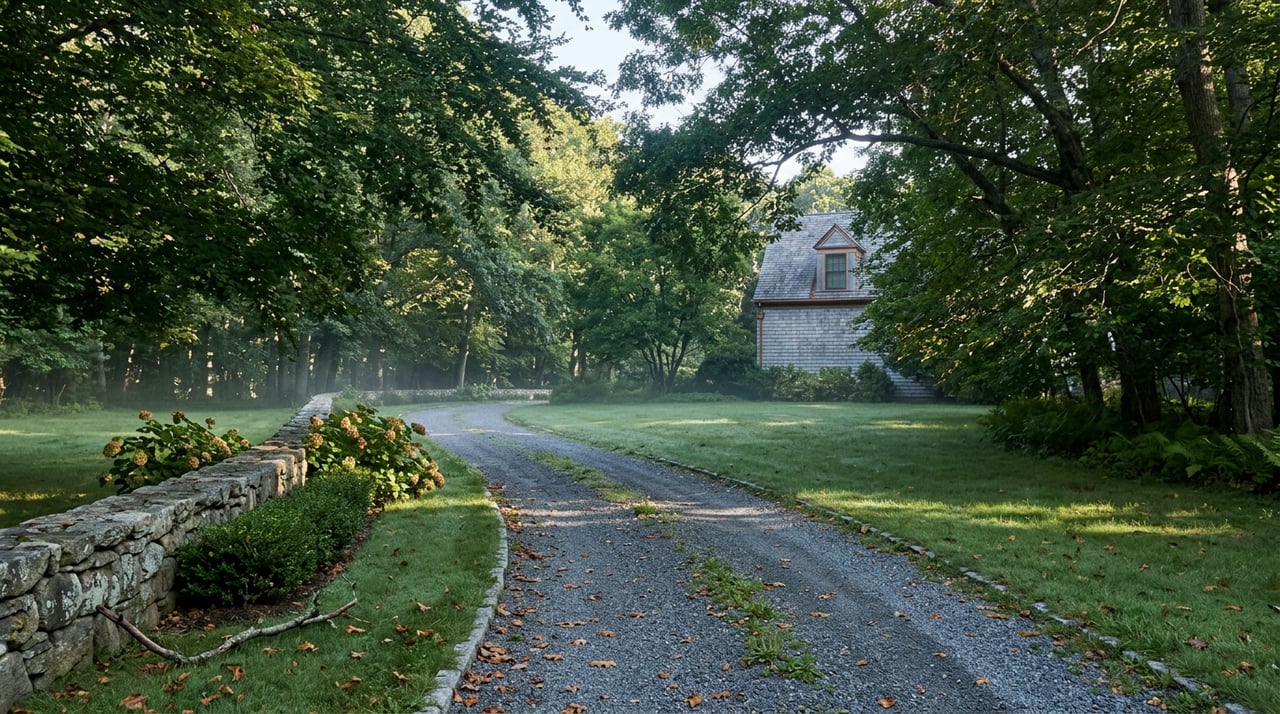
Drive west on Sunken Meadow Road toward the park entrance and there's a stretch, just before the golf course comes into view, where the trees close in and the shoulder disappears. Most people driving that stretch are thinking about parking spots and beach chairs, not about what's back behind the tree line. According to the LI Parks account, for more than a century, what sat back there was a shingle and colonial revival mansion nobody driving past could see and, until recently, nobody could quite explain.
That property has a name now that more Fort Salonga residents are starting to recognize: Owl Hill. And the story of how it went from a private estate slated for subdivision to a Suffolk County park is stranger, and more specific, than "the county bought some land."
Here's the detail that gets flattened in most retellings: this wasn't a case of the county stepping in before a developer could subdivide the property. The subdivision had already happened. By the time Suffolk County closed on the purchase, the roughly 27.6 acres at 99 Sunken Meadow Road had been legally split into 17 separate vacant lots plus one improved lot holding the historic house and garage. The county's own 2024 acquisition resolution spells this out in the flattest possible terms: $370,000 for each of the 17 vacant parcels, and $2 million for the one improved lot of about 5.71 acres, for a total of $8.29 million.
In other words, Fort Salonga came closer to losing this land than "almost" suggests. Someone had already filed the paperwork. The lot lines already existed. What Suffolk County bought back, parcel by parcel, was a subdivision that had already cleared the legal threshold to become 17 individual house sites.
The path to that purchase took years. TBR News Media reported that the property first came up for sale in 2017, its first time on the market in more than six decades, listed at $6.45 million. The buyers who took it on had plans to build up to 17 homes. By early 2023, Suffolk Legislator Rob Trotta was publicly confirming the county had made an offer of $6.3 million to head that off, an offer the owners hadn't yet accepted. Fort Salonga Association president Keith Macartney told a reporter at the time that losing the property to development would be a serious loss for a neighborhood that has already seen traffic and construction associated with nearby projects like the Preserves at Indian Hills. It took another year and a substantially higher number for a deal to close. The Legislature approved the final acquisition in October 2024 under the county's quarter-percent Drinking Water Protection Program, the same funding mechanism the county uses to keep watershed and conservation land out of private hands.
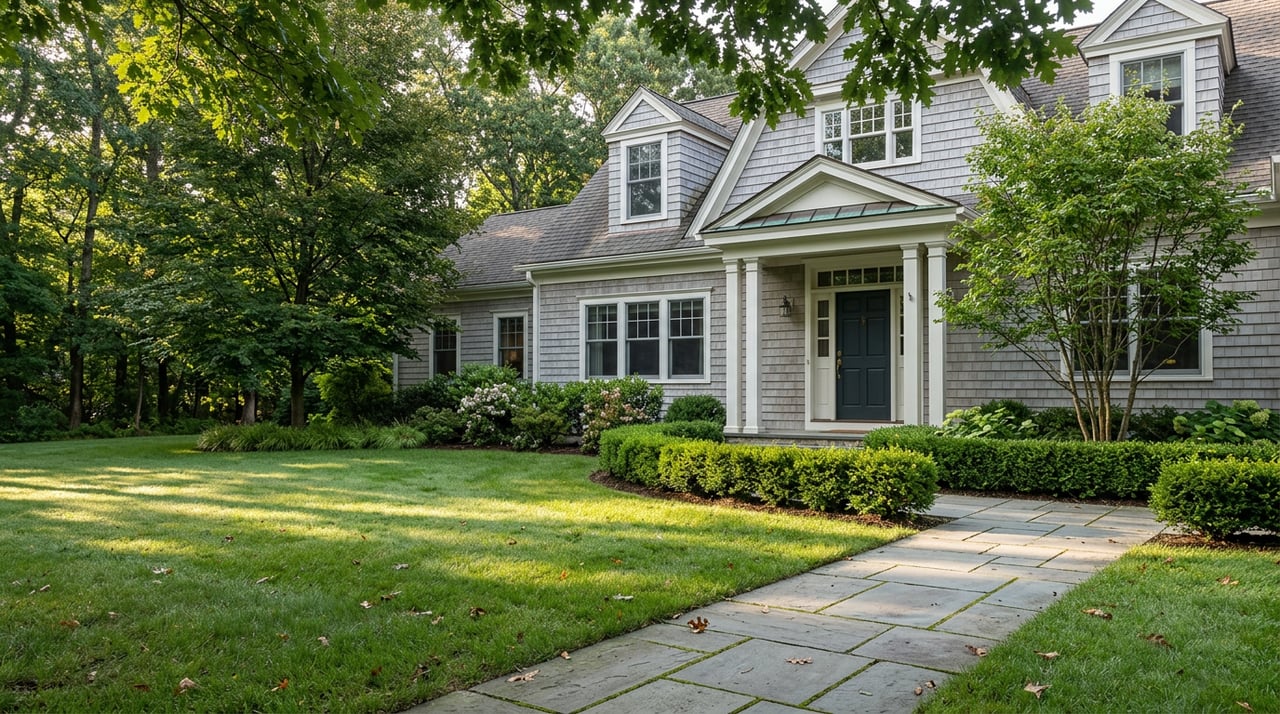
The house itself turns out to be more significant than its subdivision paperwork would suggest. The two-and-a-half-story mansion, built in 1907 along with a circa-1908 garage and a designed landscape from the same period, was commissioned by Edmund Wetmore, reportedly the first patent lawyer in the United States. Wetmore's decision to buy land in what was then called Middleville is tied to his work with the Sons of the Revolution and to the site's connection to the 1781 Battle of Fort Slongo, the raid that gave the hamlet its current name. His country house is credited with helping establish Fort Salonga's identity as a place, not just a stop on the map.
What nobody knew for most of the 20th century was who designed it. That changed in 2017, when independent historian Corey Geske, working through the Henry Killam Murphy Papers held at Yale University Library, found drawings for the estate and identified Murphy as the architect. Murphy opened his own firm in 1907 and partnered with Richard Dana the following year, and while his catalog includes colleges, libraries, and churches across the country, he's best known internationally for educational campus designs in China that blended Eastern and Western architectural traditions. Yale's own project index lists the Wetmore House among his early commissions, dated 1907 to 1908.
That discovery is what elevated the property from "old house near the park" to a documented example of Murphy's early residential work, and it's a large part of why the New York State Board for Historic Preservation reviewed the Edmund Wetmore Estate nomination on June 4, 2026, and why State Parks announced the next day that the property was among 19 sites and districts recommended for listing on the State and National Registers of Historic Places.
Owning the land and stabilizing it are two different projects, and Suffolk County is still in the middle of the second one. In March 2026, the County Legislature approved $600,000 for restoration work at what's now called Owl Hill County Park, split between $100,000 from capital reserve funds and $500,000 in county serial bonds. That funding is aimed at the house and garage rather than at building out visitor amenities, which means the timeline for public access, trails, or programming at the site hasn't been announced yet. If you've been waiting to walk the property, the honest answer right now is that the county is still working on keeping the buildings standing.
Owl Hill isn't the only piece of land near Sunken Meadow getting this kind of attention this year. Inside the state park itself, the National Audubon Society landed a $1.5 million grant from the Long Island Sound Futures Fund, money directed at protecting the saltmarsh sparrow, a species in sharp decline, by creating safer nesting habitat within the park's marsh areas. It's a different agency, a different funding source, and a different kind of land entirely, tidal marsh instead of upland woods, but it's the same underlying pattern showing up twice in one year on the same stretch of North Shore: land near Sunken Meadow that could easily have been left alone or quietly lost is instead getting active, funded intervention.
For residents who already treat Sunken Meadow as a backyard, this doesn't change your weekend plans yet. The park's own trail network still does the daily work: the Wetland Trail winding along the creek to where it meets 25A, the three-quarter-mile boardwalk along the Sound, and the northern end of the Long Island Greenbelt Trail starting right at the park's edge. A short drive down Fort Salonga Road, Makamah Nature Preserve keeps offering its quieter, curvier wooded loop that eventually runs into the edge of the golf course. Over on Old Dock Road, the Kings Park Hike & Bike Trail still winds through the woodlands with its own views of the Nissequogue River. None of that changes because of what's happening at Owl Hill.
What does change is a little bit of what you know about the tree line you've probably driven past hundreds of times. The county's own paperwork, oddly enough, files the Owl Hill address under the hamlet of Northport in the Town of Smithtown, even though everyone who lives around it calls it Fort Salonga, one more reminder that this part of the North Shore has never fit neatly onto a single town line. What sits back there is a documented Henry Killam Murphy building, a piece of land that had already been split into 17 buildable lots before the county reassembled it, and a restoration project that's still very much in progress. The next real update will likely come when the state formally lists it and when the county sets an actual date for public access. Until then, it's worth knowing what's behind the trees the next time you make the turn toward the beach.
If you're curious about how this kind of local history connects to home values and neighborhood character across Fort Salonga, Northport, and the rest of the North Shore, Jamie Marcantonio has spent more than three decades getting to know these streets, one at a time. Let's Connect.
This article is general information, not legal, tax or financial advice. Consult a qualified professional about your situation.
Stay up to date on the latest real estate trends.
You’ll benefit from Jamie’s expertise in luxury and waterfront homes across Long Island, as she guides you with market knowledge, strategic pricing, and personalized service to make your buying or selling experience smooth and successful.
GET IN TOUCH TO LEARN MORE

157 E MAIN ST HUNTINGTON, NY 11743